Creating a Single B2B Platform for Fotocasa and Habitaclia

Context & Challenge
In large marketplaces, the end-user experience is only one side of the equation. Behind it, professional customers rely on complex B2B tools to publish inventory, manage visibility products, and handle leads.
By 2019, Fotocasa and Habitaclia operated two separate legacy B2B platforms, built on different tech stacks and shaped by years of incremental decisions. This situation created several structural problems:
- •Duplicated product and engineering efforts across brands
- •High maintenance and operational costs due to obsolete technology
- •Inconsistent experiences for customers managing listings across platforms
- •Slow delivery cycles and limited ability to evolve the product
- •Increasing friction for sales, support, and customer success teams
At the same time, the business needed to migrate more than 15,000 professional customers without disrupting their daily operations. A "big bang" replacement was not an option.
The challenge was to orchestrate a progressive transformation: unifying two platforms into a single, scalable B2B product while reducing risk, maintaining trust, and continuously delivering value.
My Role
As UX Director at Adevinta Spain, I led the UX strategy and execution of the initiative.
My responsibilities included:
- •Defining the overall discovery and rollout strategy
- •Aligning Product, Design, Engineering, Sales, Customer Support, and Management
- •Leading research, synthesis, and decision-making across multiple teams
- •Ensuring discovery, delivery, and migration moved forward in a coordinated way
- •Setting experience principles and quality standards for the new platform
I worked closely with Product and Engineering leads, while acting as a bridge between business constraints and real customer needs.
What we did
Deep customer research and stakeholder alignment
We invested heavily in understanding both customer reality and internal constraints.
On the customer side, we combined multiple research inputs:
- •Analysis of user recordings and historical research
- •Review of Customer Support calls and CSAT/NPS data
- •Identification of top pain points in ad management, lead management, and visibility products
- •In-depth interviews with 25 real estate professionals
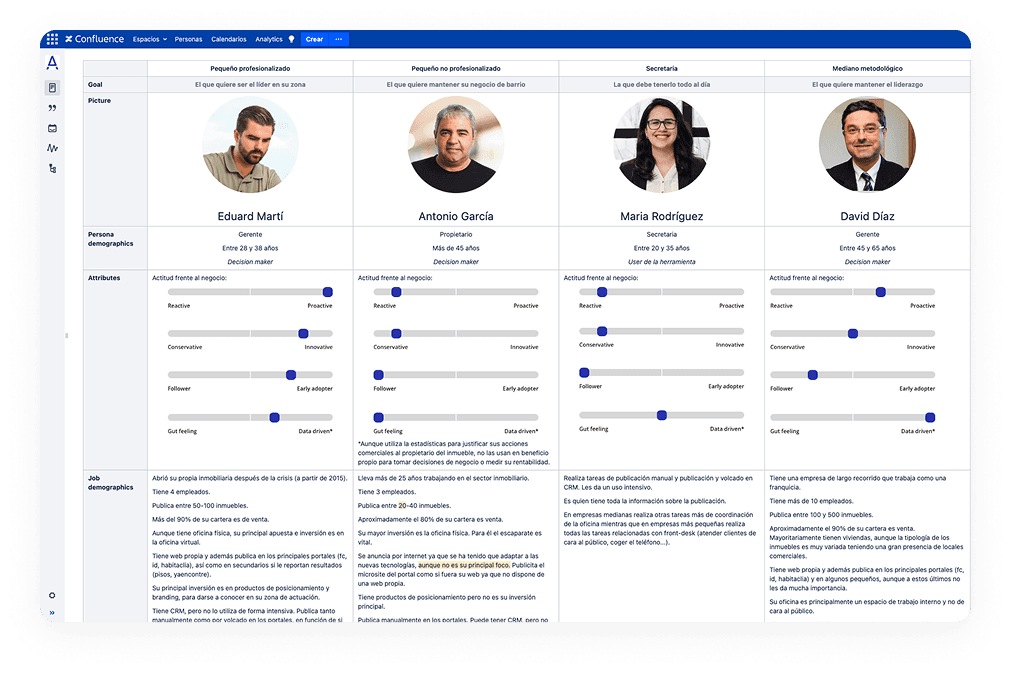
- •Definition of four clear customer archetypes reflecting different business models and maturity levels
On the internal side, we ran structured interviews and workshops with:
- •Sales, Inside Sales, and Key Account Managers
- •Customer Support and Customer Success teams
- •Business Development and Management stakeholders
This helped surface assumptions, constraints, and dependencies early, and created a strong sense of shared ownership across the organization.
Mapping and rationalizing the product ecosystem
Before designing anything new, we mapped every section and feature across both legacy platforms.
Together with Product and Sales, we:
- •Audited the full feature set of existing tools
- •Identified redundancies, inconsistencies, and obsolete functionality
- •Discussed which features were essential at launch versus candidates for removal or later iteration
- •Used this mapping to support difficult prioritization decisions
This exercise was critical to reduce complexity and avoid blindly replicating legacy problems in the new platform.
Rebuilding the information architecture from the ground up
The legacy tools had grown organically, resulting in navigation and structures that did not match customer mental models.
We redesigned the information architecture using a validation-driven approach:
- •Card sorting with internal stakeholders
- •Card sorting with 15 professional customers
- •Tree testing with another 15 customers
- •Iterative refinement leading to a validated launch proposal
The result was a clearer, more intuitive structure that scaled across brands and supported future growth.
Redesigning core workflows with continuous validation
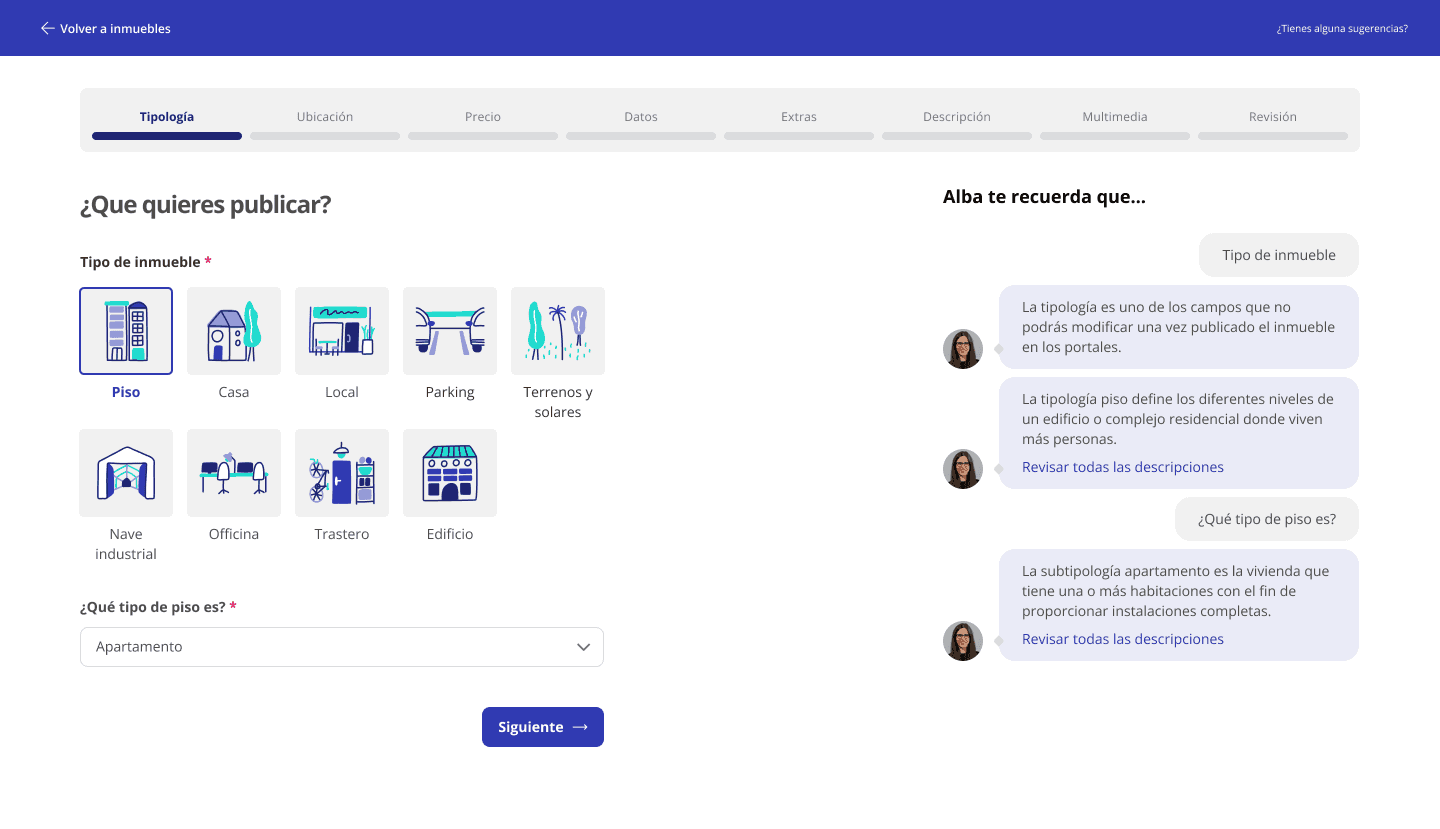
One of the most critical flows was ad insertion, a high-frequency task with direct impact on revenue and satisfaction.
We:
- •Defined what constitutes a "high-quality ad," aligning Sales, Customer Care, and user expectations
- •Harmonized different definitions between Fotocasa and Habitaclia
- •Reimagined the ad creation process with principles such as optimized for repeat usage, progressive disclosure, contextual help at every step, and clear feedback on ad quality and completeness
Throughout delivery, we continuously validated solutions via:
- •Beta customer pools
- •Feature-level feedback
- •Monitoring support tickets, bugs, and CSAT changes
- •Proactive customer calls to gather qualitative insights
Even when A/B testing was not possible due to volume constraints, we relied on before/after metrics and qualitative signals to guide decisions.
Progressive, test-and-learn rollout to minimize risk
We deliberately avoided a long, isolated build phase. Migrating thousands of customers without feedback would have been too risky.
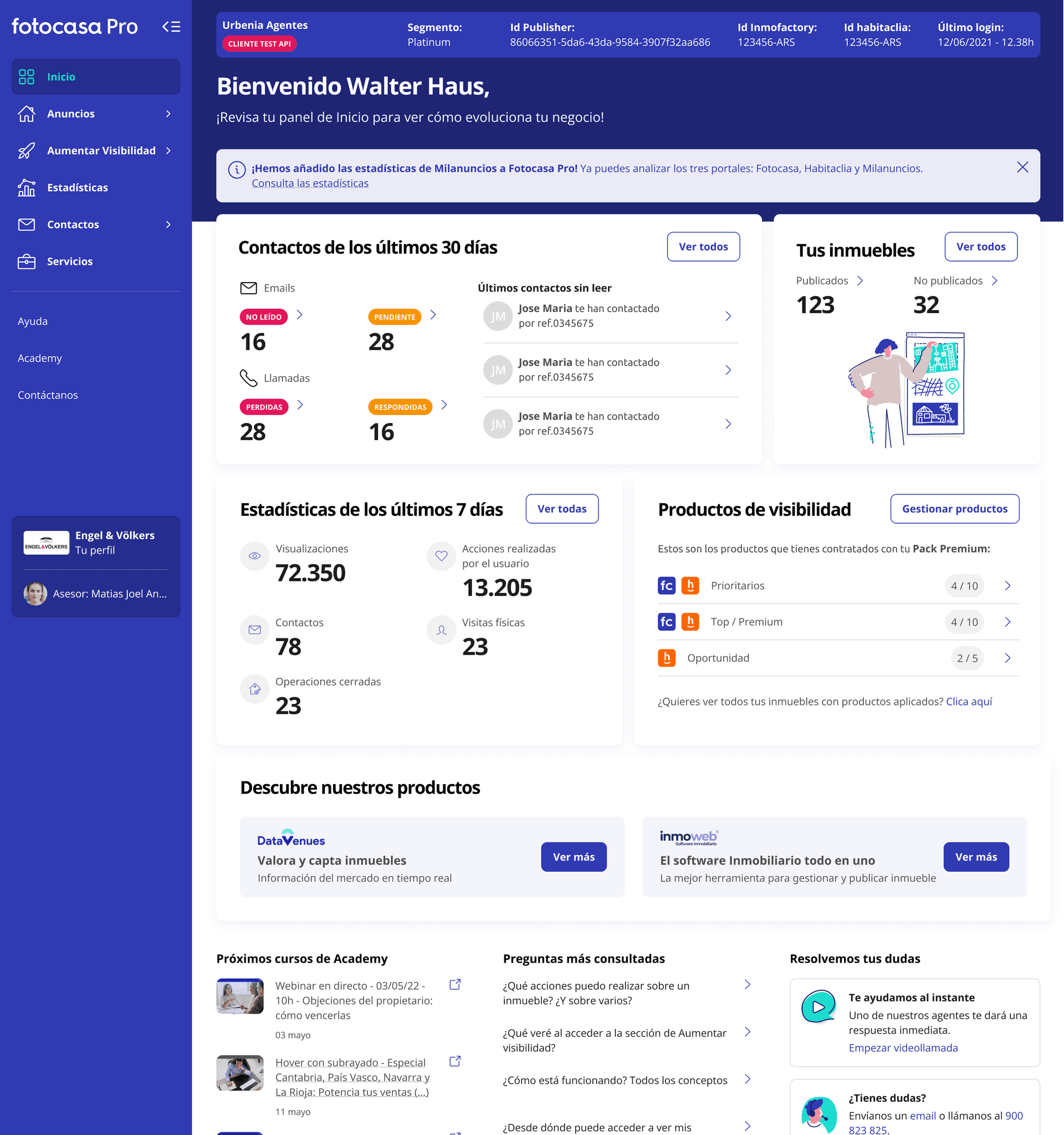
Instead, we adopted a progressive rollout strategy, where the new B2B platform coexisted with the legacy tools:
- •New sections and core flows were released incrementally
- •Customers were migrated in controlled batches of ~500 users
- •Feature flags allowed us to test changes safely
- •Each release was monitored before expanding to a wider audience
This approach allowed us to learn continuously, adjust decisions early, and avoid large-scale failures while keeping the business running.
Why this mattered
This project demonstrated that disciplined discovery combined with incremental delivery can de-risk complex, high-impact transformations.
Beyond metrics, the project established a scalable product foundation, aligned teams around a shared vision, and set a new standard for how complex B2B platforms are designed and evolved inside the organization.