Building a Customer-Centric Culture at Adevinta Spain
Context & Challenge
When I joined Adevinta Spain in 2018, the company did not yet have a single approach to digital product development. Each brand (Fotocasa, Infojobs, Coches.net and Milanuncios) had a different product development framework. The culture was generally output-oriented rather than outcome-oriented, and heavily sales-driven.
The challenge was not just to increase research activity, but to embed customer centricity as a scalable operating principle that influenced the everyday decisions of product teams—and, more broadly, the entire organization.
My Role
As UX Director, I led this initiative end-to-end at company level.
My responsibility was to:
- •Diagnose systemic gaps in how customer insights informed decisions
- •Define a shared customer-centricity strategy
- •Design the processes, metrics, and tooling required to sustain it
- •Drive executive alignment and cross-functional adoption
- •Ensure insights translated into measurable product and business outcomes
This was not a UX initiative in isolation. It was an organizational transformation, with the UX team acting as the catalyst.
What we did
Establish a shared understanding of the customer and the experience
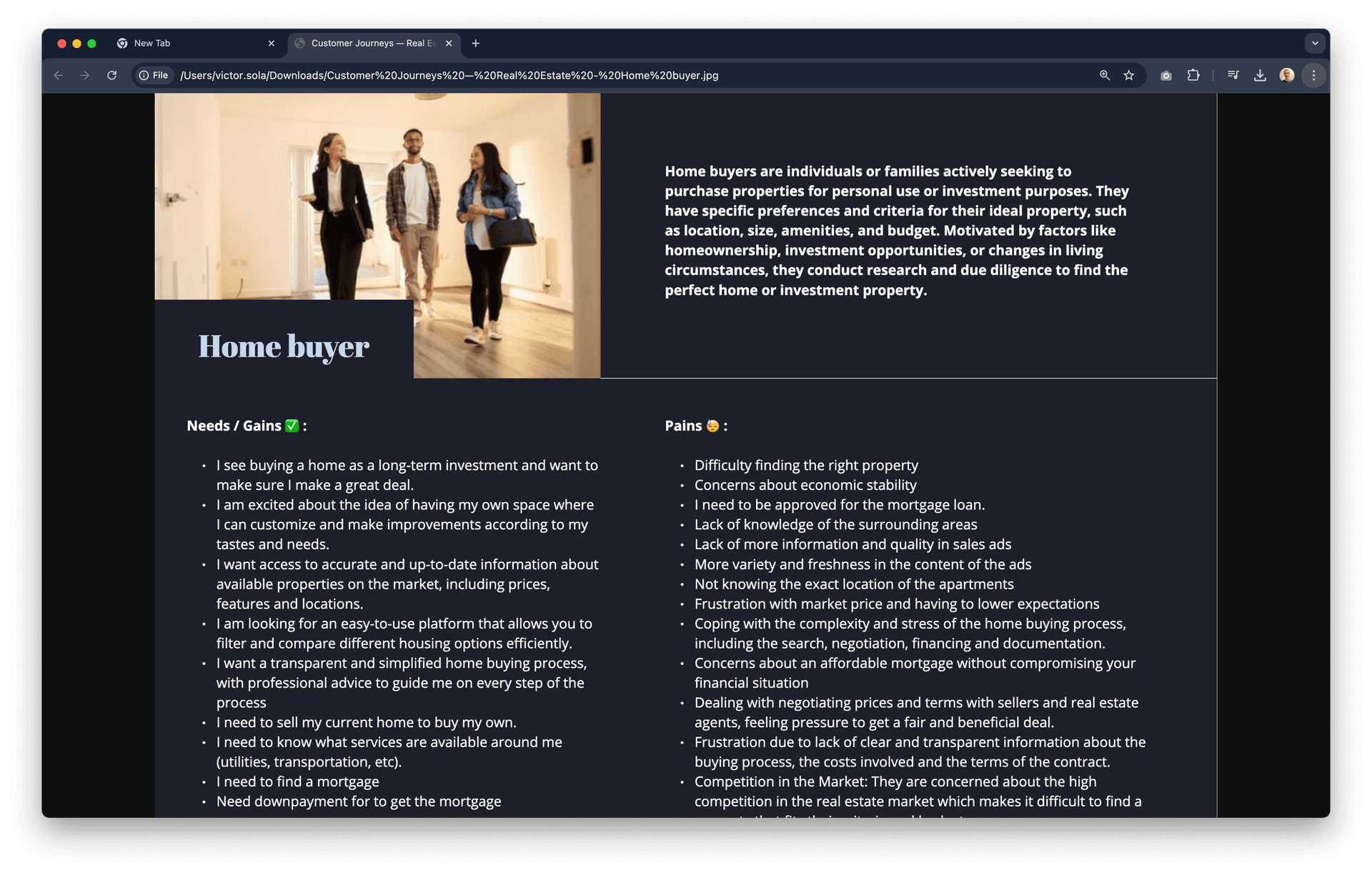
We started the initiative by defining a set of user personas for all products and brands, and documented end-to-end customer journeys to make customer needs visible, explicit, and shared.
This created a common language for product teams and provided a concrete reference for decision-making.
Establish an experience metrics system
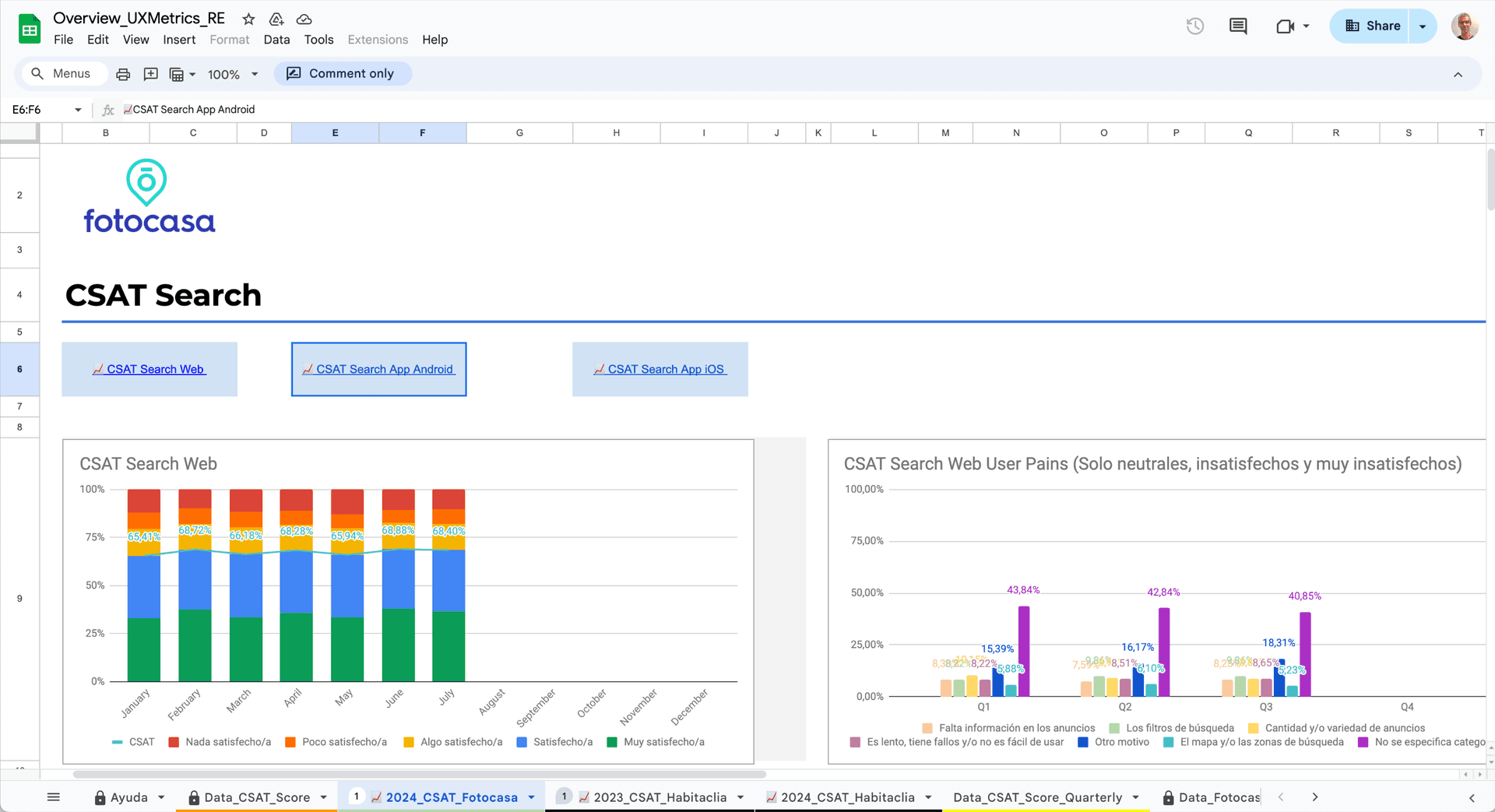
We designed and rolled out a satisfaction measurement methodology at different journey touchpoints through CSAT metrics, with the goal of measuring satisfaction levels but above all detecting and quantifying the main experience pains.
We also established control dashboards for visualizing the results of all CSAT metrics.
Finally, we incorporated CSAT metric improvement and the elimination of critical pains at different journey stages as OKRs for product teams.
This system of measurement, reporting, and goal-setting for teams enabled a radical shift in product roadmap focus and a quantifiable improvement in experience over time.
Strengthen research capabilities
To reinforce evidence-based decision-making, we created and structured a UX Research team with a cross-cutting and strategic approach.
We defined research as a key capability of the product model, not a one-off service. To achieve this, we built a dedicated team aligned with the main product domains, and established ongoing collaboration with Product and Design throughout the entire discovery and validation cycle.
In parallel, we designed processes and systems to scale research and accelerate study execution. Part of the research team's time was explicitly dedicated to research operations, focused on:
- •Standardizing the planning, execution and synthesis of studies
- •Reducing friction and lead times in launching research
- •Enabling teams to access insights quickly and recurrently
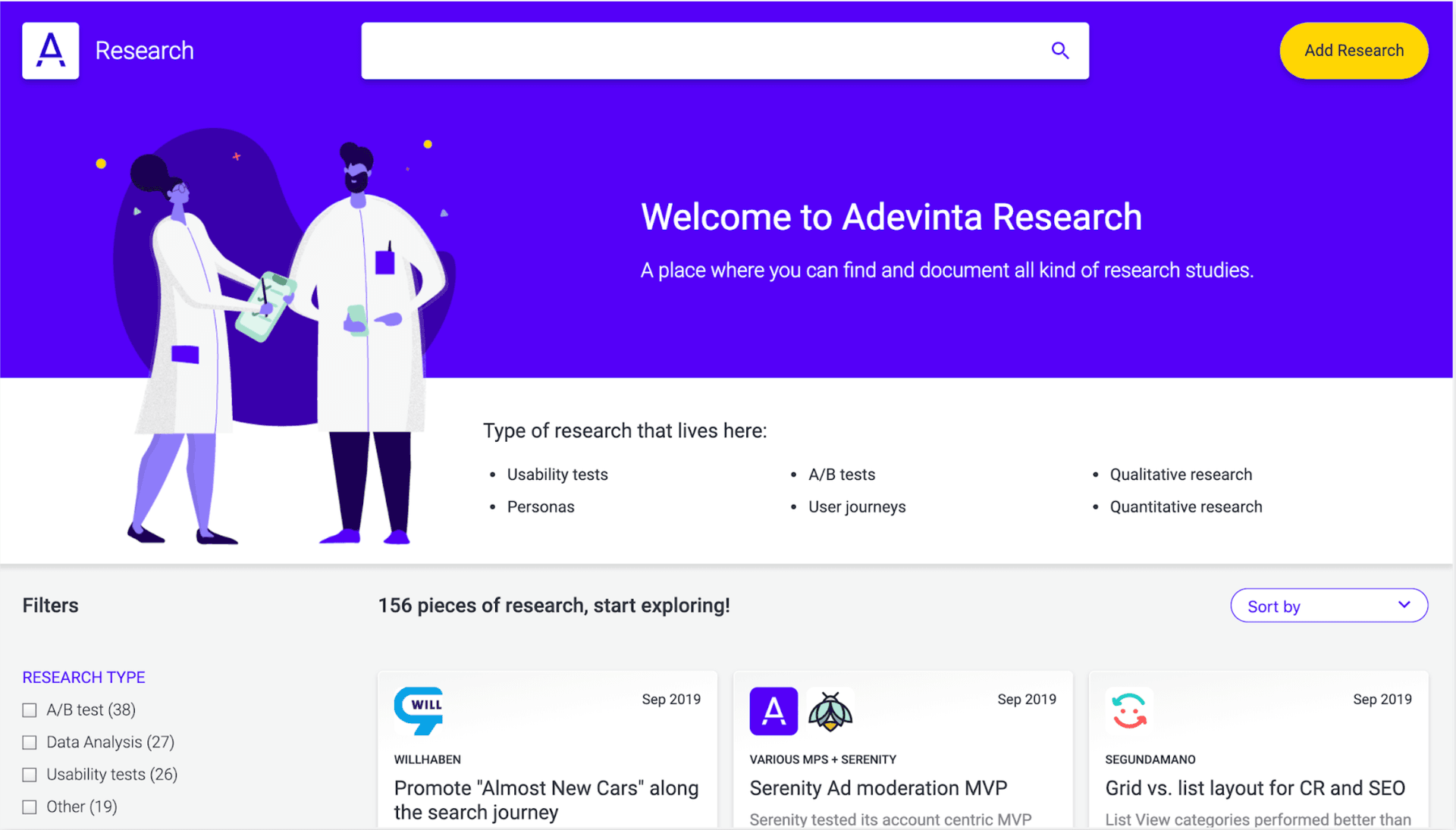
As a central piece, we created a shared insights repository where qualitative and quantitative learnings from multiple sources were consolidated. This system enabled knowledge reuse, pattern identification over time, and prevented fragmentation into isolated studies.
The result was a transition towards a continuous learning system, integrating research into teams' daily work and sustainably raising the quality of product decisions.
Optimize customer feedback cycles
One of the goals we set for this initiative from the start was to optimize the time we invested in designing, organizing and conducting research sessions with our customers, whether for exploratory research or for validating potential solutions.
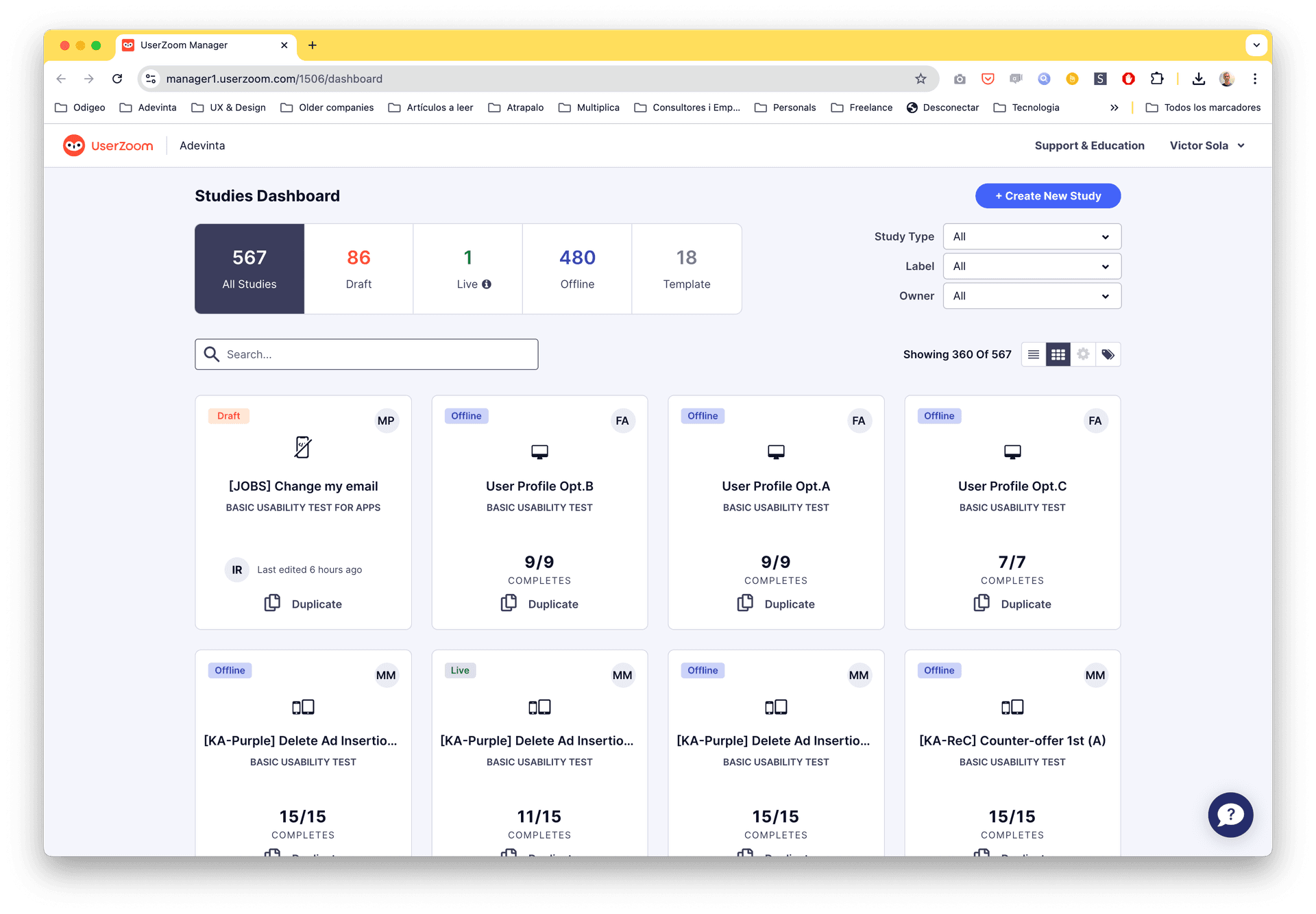
To accelerate feedback cycles, we built an internal customer research panel and implemented Userzoom as a remote unmoderated testing tool.
These two measures significantly reduced recruitment effort and insight turnaround time, allowing teams to validate decisions quickly and continuously as part of their normal workflow.
Implement a shared Product Discovery framework
In parallel to the customer centricity strategy, we designed and deployed a Product Discovery framework that provided teams with a structured way to explore problems, generate hypotheses and validate solutions before committing to delivery.
This framework was a natural extension of the customer-centric culture we were building: it operationalized the principle that understanding the customer should come before building.
You can learn more about the details of this specific initiative in the project Defining a Scalable Product Discovery Framework.
Why this mattered
The customer centricity strategic initiative radically changed how decisions were made at the company. This initiative, which spanned several years, placed users and customers at the center of decisions about how to evolve our products and services.
Customer centricity moved from an abstract value to a practical system:
- •Supported by shared artifacts
- •Reinforced through metrics
- •Sustained by an internal user panel and accelerating tools like Userzoom
It demonstrated that design leadership at scale is less about individual solutions and more about creating the conditions for consistently better decisions—across teams, over time.