UX Debt Management at Scale

Context & Challenge
Adevinta Spain operates long-standing digital products such as Coches.net, InfoJobs, Fotocasa and Milanuncios, some of them active for more than 20 years. Years of continuous delivery across multiple teams and platforms inevitably led to accumulated UX inconsistencies: fragmented interfaces, uneven interaction patterns, accessibility gaps and declining perceived quality.
While teams were aware of many of these issues, there was no shared language, ownership model or operational framework to address them. UX debt existed, but it was invisible, untracked and systematically deprioritised in favour of new feature delivery.
The challenge was to make UX Debt explicit, manageable and part of normal product decision-making, without slowing down delivery.
My Role
As UX Director, I led this initiative at company level.
My responsibility covered:
- •Defining a shared, pragmatic definition of UX debt
- •Aligning product, design and executive leadership around the problem
- •Embedding UX debt management into existing delivery and prioritisation workflows
- •Ensuring long-term sustainability through visibility, reporting and incentives
What we did
Defining UX Debt
We started by creating a clear and strict definition to avoid ambiguity and misuse.
UX debt was defined as: known user experience issues that negatively impact users and remain unresolved over time.
Equally important was defining what UX debt was not. We explicitly excluded:
- •New features based on validated user needs
- •Technical bugs (handled through existing processes)
- •Performance issues (considered technical debt)
- •Planned feature iterations — unless they were postponed for more than two quarters, at which point they became UX debt
This clarity helped teams distinguish between product discovery work, technical issues and genuine UX quality debt.
Categorising UX Debt
To ensure consistency across teams and products, we established a shared categorisation model:
- •User Interface: visual inconsistencies and misaligned components
- •Interaction Design: failure to reuse established interaction patterns
- •Information Architecture: structural and navigation issues
- •Content: inconsistent tone, clarity or messaging
- •Accessibility: contrast, semantics, keyboard navigation, screen reader support
- •Cross-Channel Experience: misalignment between web, native apps and other platforms
This categorisation allowed us to analyse patterns, identify systemic issues and move the conversation beyond isolated UI problems.
Operationalising UX Debt
To move from theory to action, UX debt had to live where teams already worked.
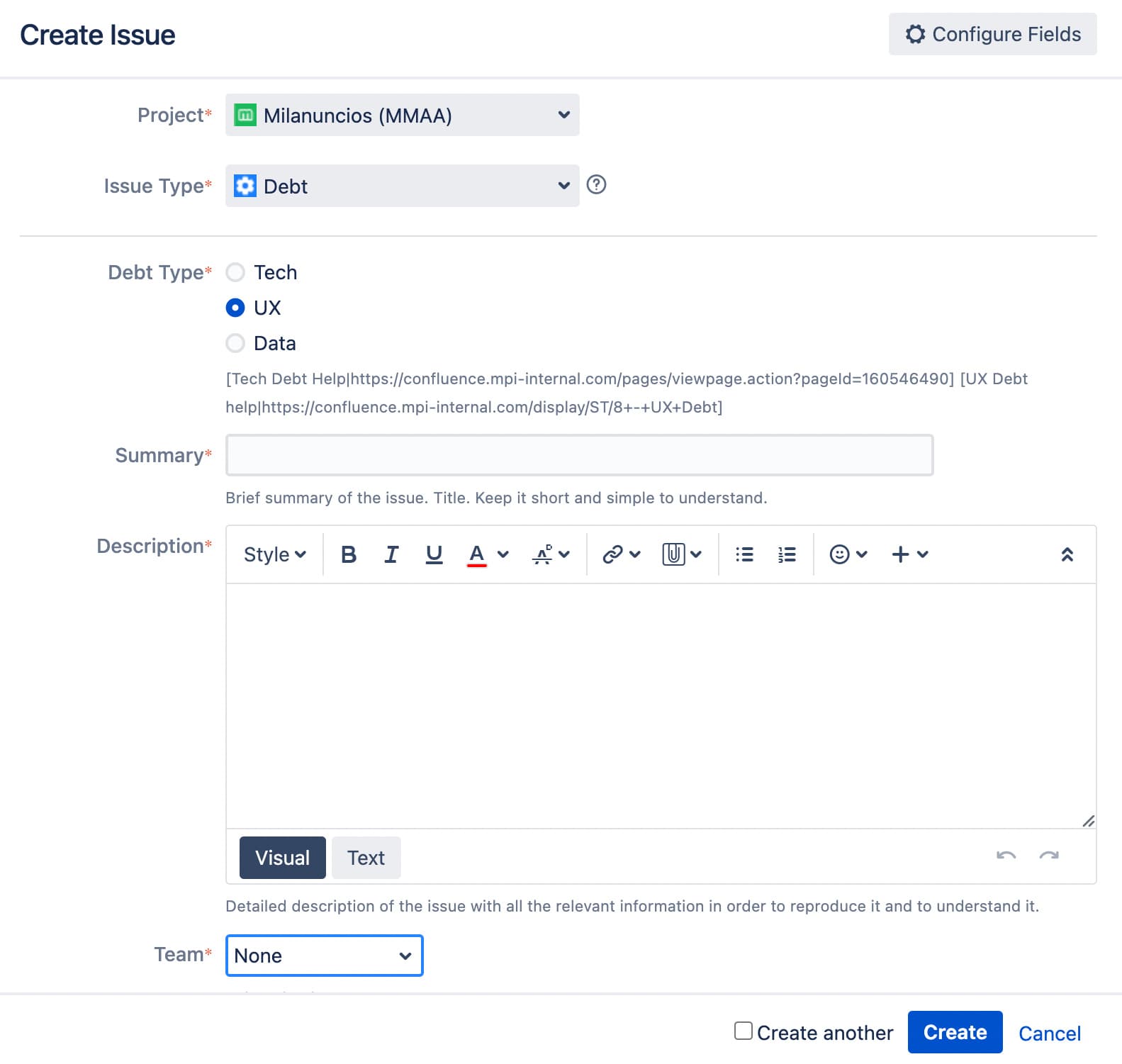
We introduced UX debt as a dedicated issue type in Jira, aligned with existing technical debt tracking. Designers across all product teams were asked to systematically document known UX issues that met the definition.
To support prioritisation, we created a UX debt priority calculator, helping teams assess impact versus effort and avoid focusing only on "easy wins".
At leadership level, we agreed on a concrete commitment: each product team would resolve a fixed number of UX debt issues per quarter. While not perfect, this agreement created accountability and made UX debt visible in planning conversations.
Sustaining Momentum Through Visibility
Sustaining the initiative required continuous visibility and reinforcement.
We focused on three levers:
- •Regular communication: UX debt was consistently reinforced through UX ceremonies, Slack channels and leadership forums.
- •Executive-level reporting: UX debt progress was included in monthly product reviews, alongside roadmap delivery and KPIs. This positioned UX quality as a business concern, not a design one.
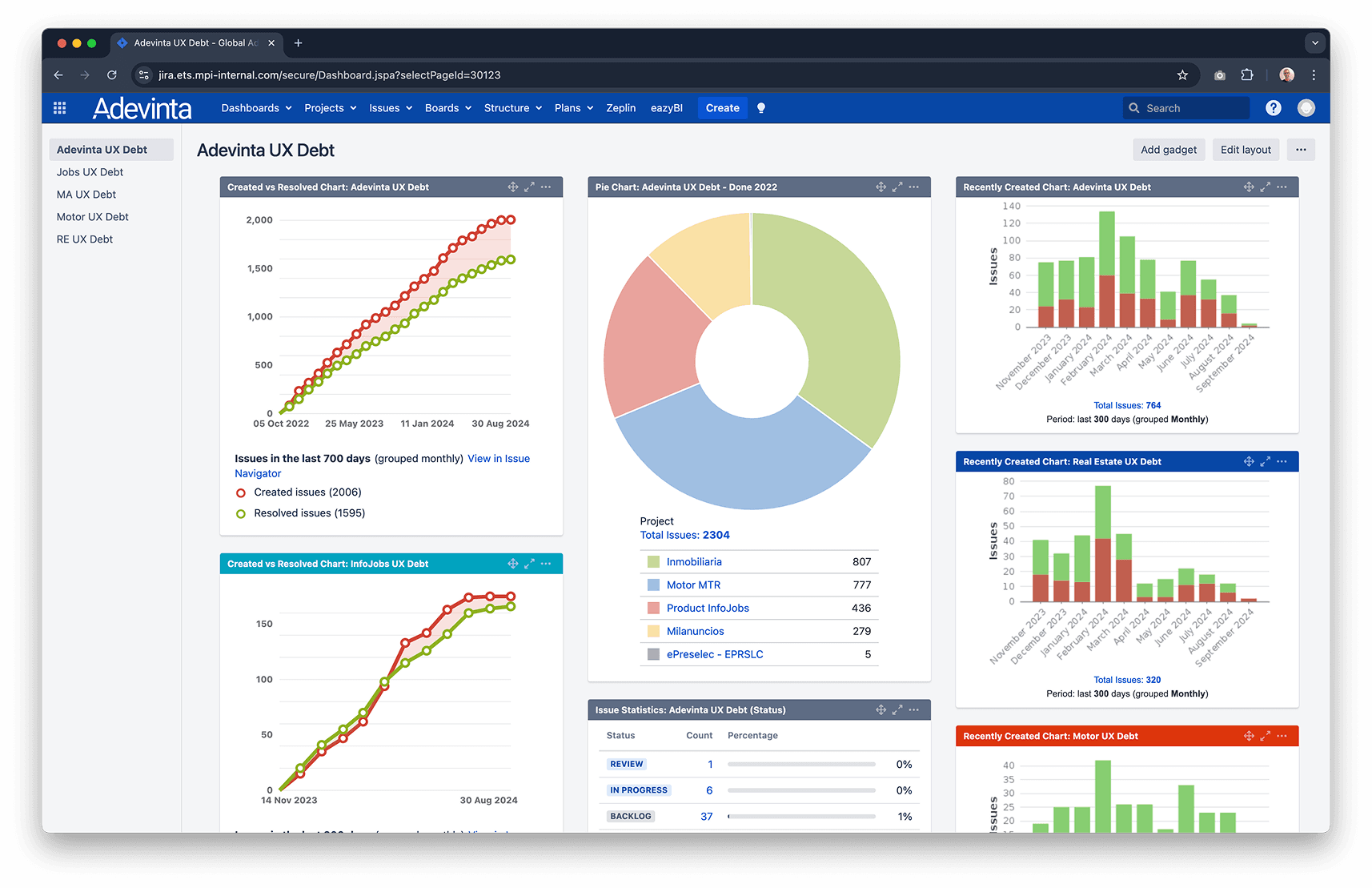
- •Shared dashboards: a Jira dashboard made UX debt creation and resolution transparent across products, teams and markets.
We also actively celebrated teams and designers who made meaningful progress, reinforcing positive behaviour and shared ownership.
Why this mattered
This initiative changed how teams thought about UX quality at scale.
- •UX debt became explicit instead of invisible
- •Quality trade-offs became conscious decisions
- •Long-term product health could be balanced against short-term delivery
By treating UX debt as a first-class concern, teams were able to improve consistency, accessibility and perceived quality without sacrificing speed.
Beyond numbers, the most important outcome was cultural. UX debt reframed quality as something teams actively manage, not something they react to when problems become critical.